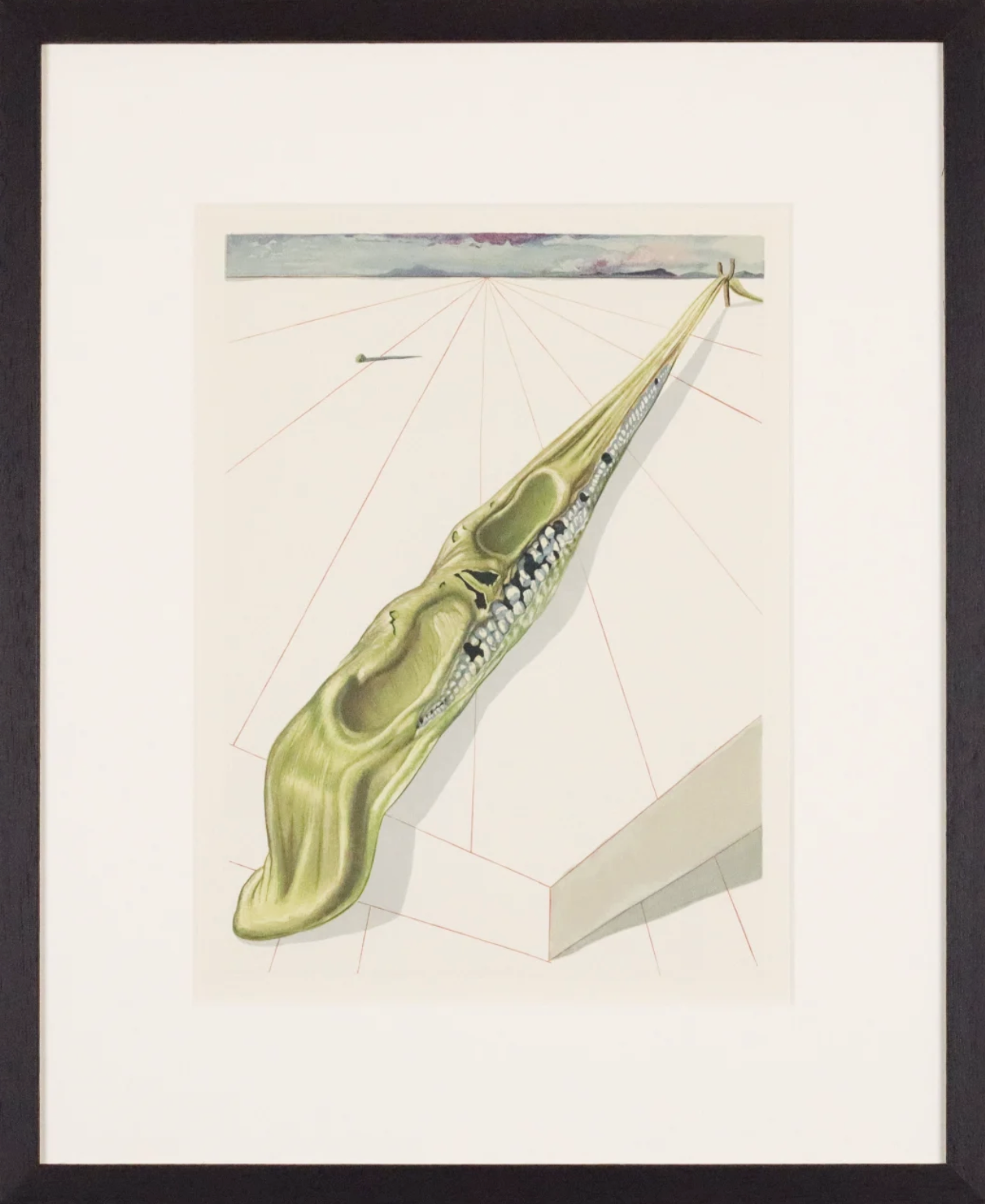
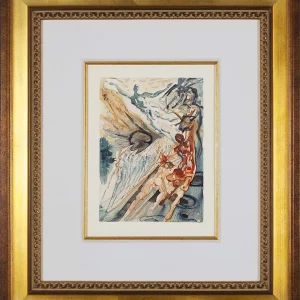
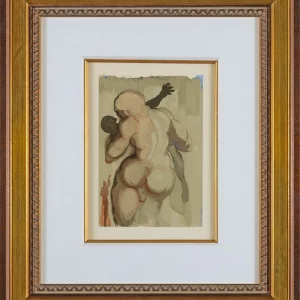
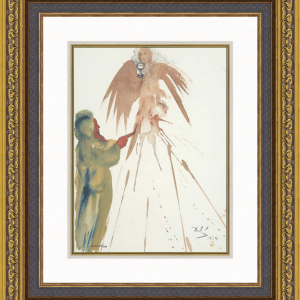
Description of Art: Hell Canto 14 unfolds in an atmosphere of blistering grandeur and icy dread, and Dalí transforms this canto’s confrontation with the blasphemers and the monstrous figure of the Old Man of Crete into a scene marked by stark symbolism and searing illumination. The palette burns with molten reds, pale golds, and cold stone-grays—colors that collide like heat striking unyielding rock. The light is harsh, unforgiving, carving every form with a sculptural clarity that feels both ancient and apocalyptic.
At the center, an elongated figure stands upon the scorched sands, its posture tense, strained, as though suspended in the grip of the relentless fire falling from above. Dalí etches the body with precise engraving lines before softening sections into drifting heat-haze, giving the impression of a soul caught between solidity and dissolution. The gesture—arms slightly raised or body braced—captures the weary defiance and suffering that define this canto’s burning landscape.
Dante stands nearby, his figure rendered with steadier contours, his posture marked by solemn attention. Dalí grounds him firmly despite the wavering atmosphere, positioning him as a human presence confronted with the vast, symbolic weight of the scene. His gaze is lifted toward the towering form in the distance, and his quiet stance underscores the mixture of awe, fear, and contemplation that permeates this encounter.
In the background, a monumental shape rises—an abstracted, fractured silhouette suggestive of the Old Man of Crete. Dalí renders it not as a literal statue but as a looming, symbolic presence: angled planes, broken surfaces, and towering volumes that seem carved from the collision of light and stone. It appears both ancient and disintegrating, echoing the canto’s theme of a world fractured by human sin, its cracks feeding the rivers of torment below.
The surrounding landscape is stark and inhospitable: burning sands ripple like molten metal; faint, jagged forms lean as though warped by heat; and streaks of fire fall in thin, merciless lines from an unseen sky. The air trembles with oppressive brightness, capturing the canto’s vision of suffering imposed not by movement but by the ceaseless, downward force of divine judgment.
Dalí distills the essence of Canto 14 into a moment of monumental severity—a vision where myth, sin, and suffering converge, where the landscape itself bears witness to humanity’s fractures, and where the Inferno reveals a punishment as vast and immovable as the forces that shaped it. It is a scene shaped by scorching light and petrified grandeur, capturing the gravity at the heart of this canto.