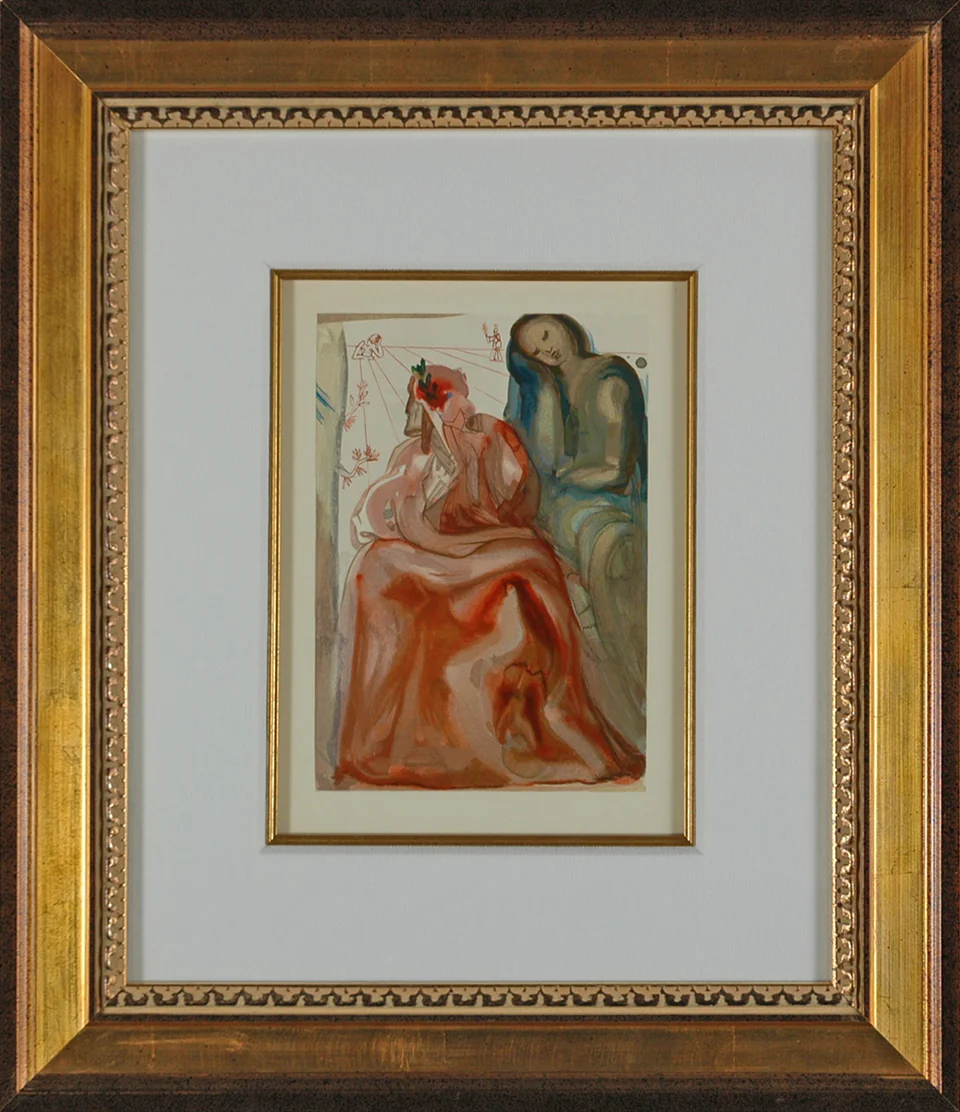
Description of Art: In Purgatory Canto 32, Dalí visualizes one of the most symbolically dense passages in Dante’s Divine Comedy: the ritualistic procession in the Earthly Paradise. Dalí’s composition blends classical Christian allegory with his uniquely surreal vocabulary—elongated figures, tapering limbs, and ethereal washes of color. The central forms appear suspended in an atmosphere of revelation, their gestures echoing the ceremonial purification described in the text. Delicate cross-hatched contours contrast with soft, luminous watercolor effects, creating a balance between structure and transcendence.
Dalí transforms Dante’s spiritual pageant into a dreamlike vision, where the boundary between vision and ritual dissolves.